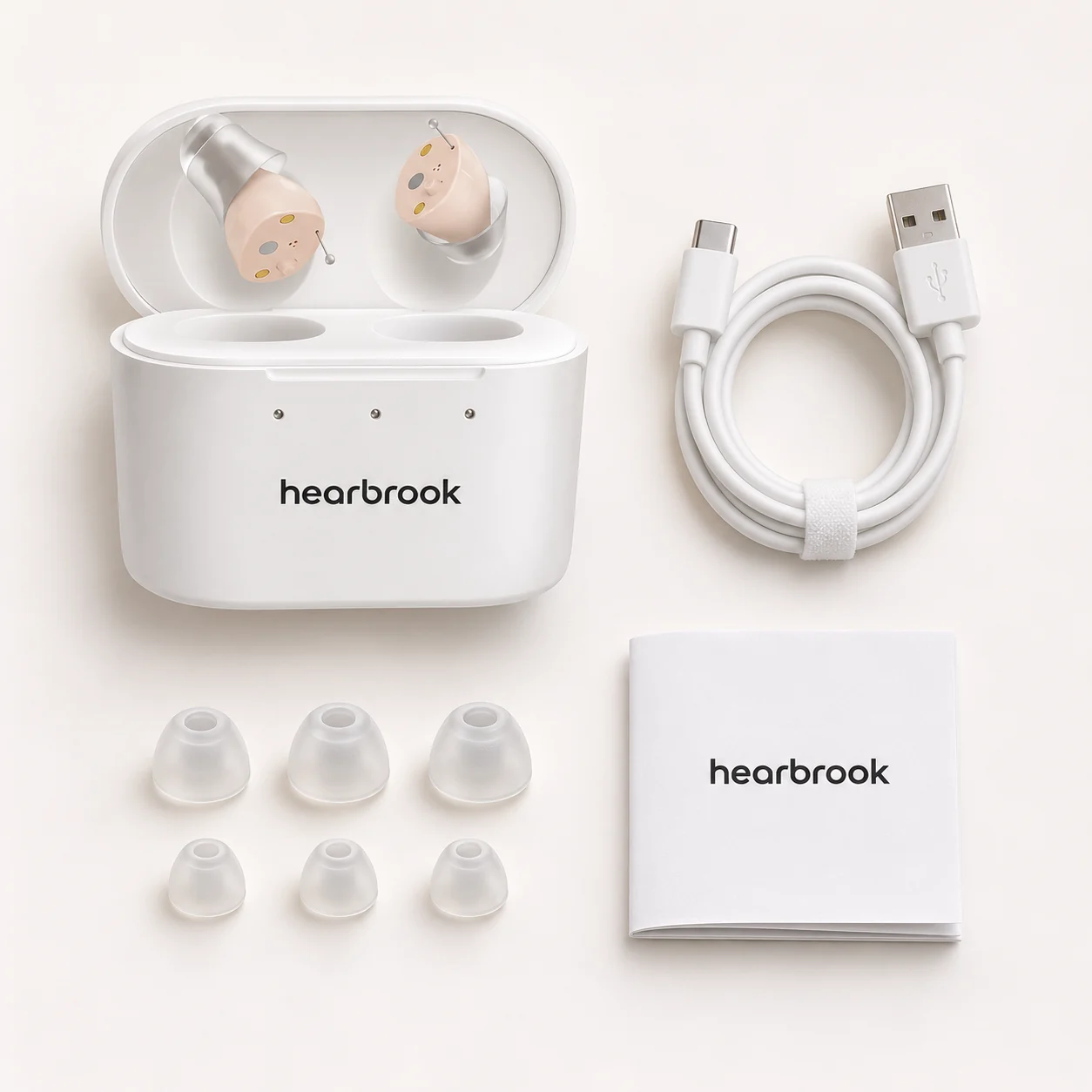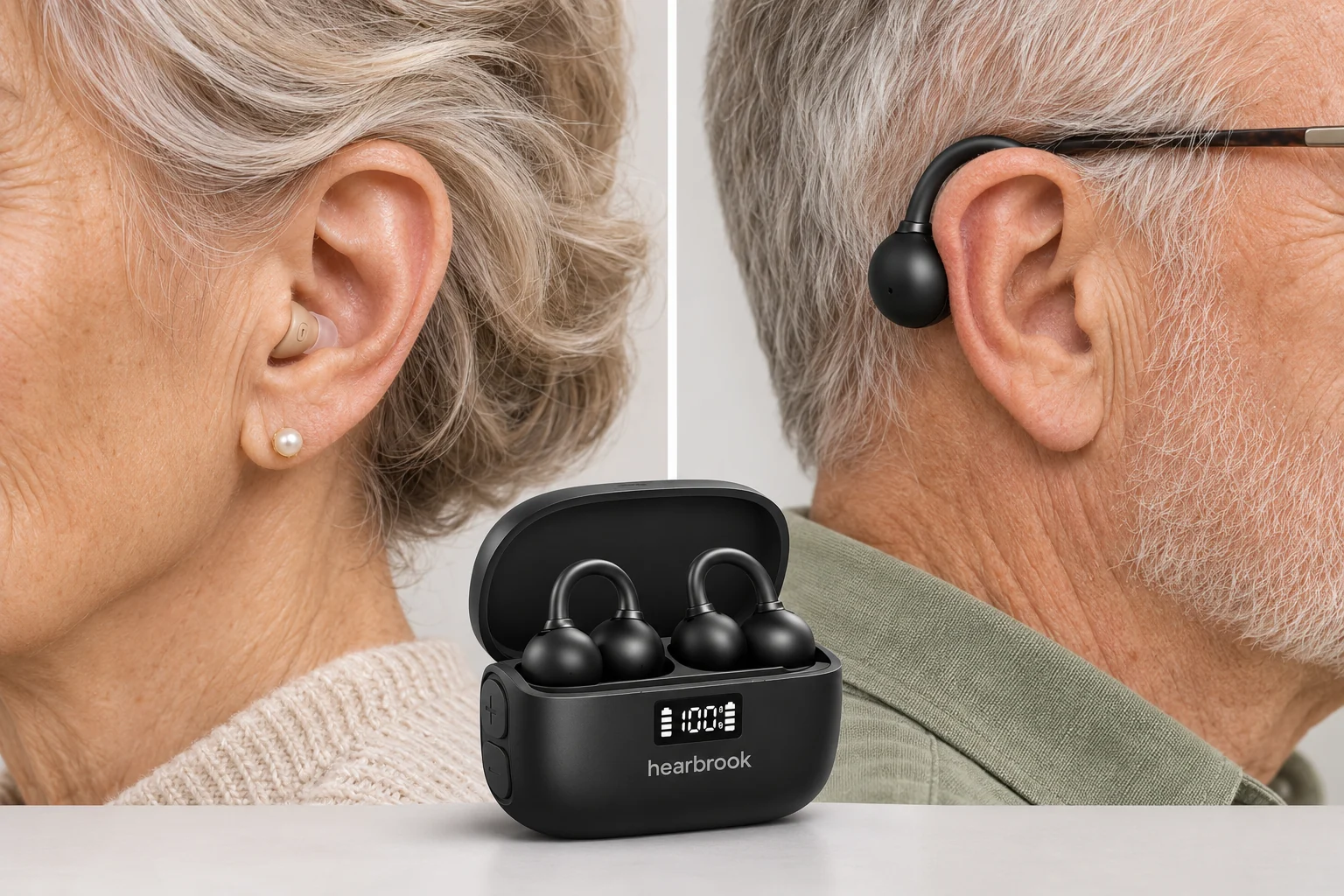
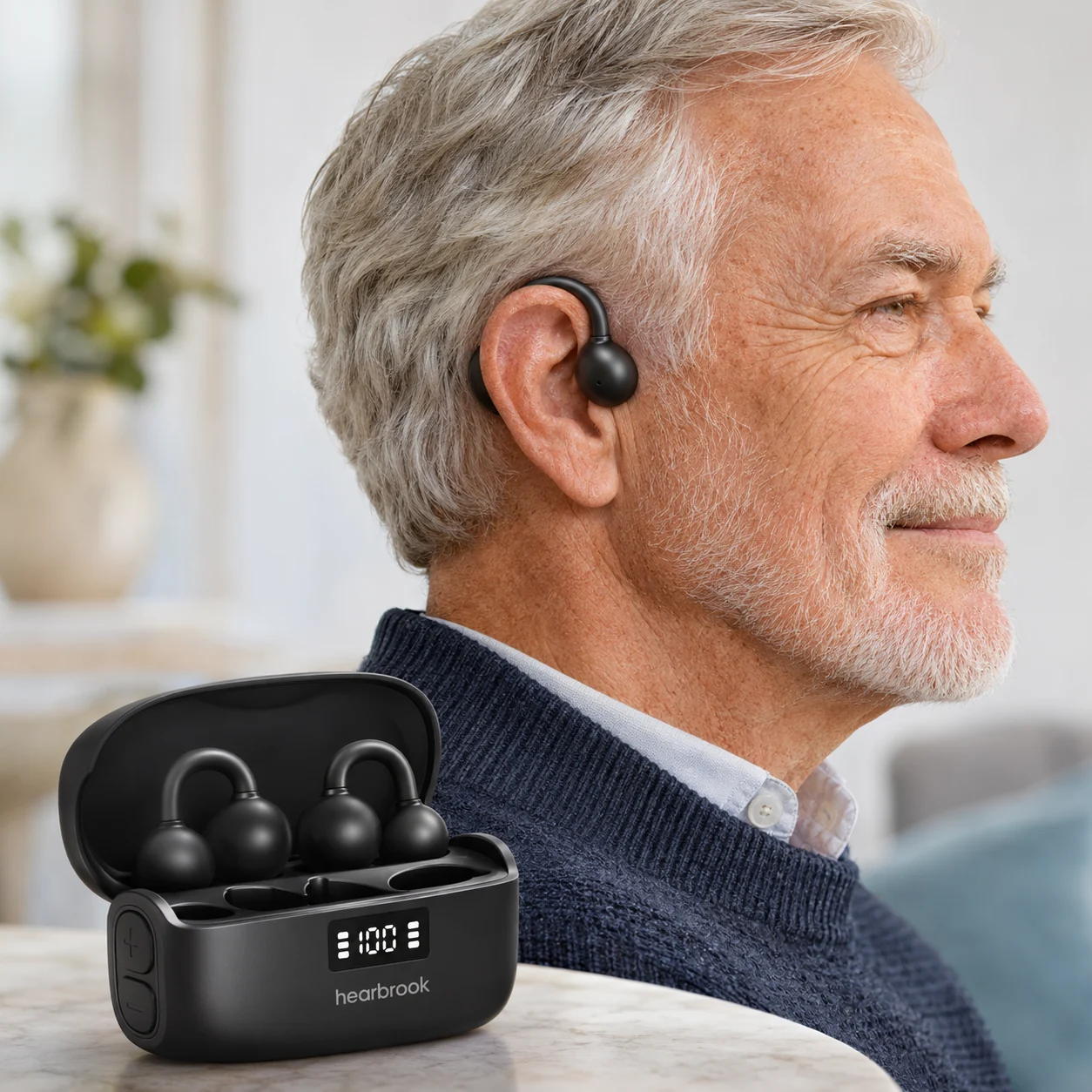
In-ear and over-the-ear designs place their components differently, but a marketing phrase such as “open ear” does not establish exactly where a model sits. Compare the manufacturer’s fitting instructions, the earpiece, the controls, and the space around your glasses before choosing a style.
What to keep in mind
- A small case and a small earpiece are different design questions.
- Open-fit designs may still place a tip at or within the ear canal.
- Daily handling matters as much as how a product looks in a photograph.
Get a clear picture of where every component goes
The FDA describes hearing aid styles including behind-the-ear, receiver-in-canal, in-the-ear, and canal designs. The position of the electronics is not always the position where sound enters the ear. A body behind the ear can connect to an earpiece at the canal. Use a labeled fitting diagram rather than guessing from the product name.
Ask the seller to identify the body, connection, and ear tip on the exact model you are comparing. If a listing uses “open ear,” request an explanation of that phrase. Do not assume it means no contact with the ear canal, no replaceable tips, or automatic compatibility with everything else you wear.
Compare the tasks your hands will need to perform
Think beyond putting the device on. You will also remove it, place it in the charging case, distinguish the intended side, adjust settings, and inspect the tip. Check whether these tasks are clear from the instructions. If a helper is involved, they should read the same model-specific instructions.
Smaller is not always easier to handle. When reviewing pictures, look at the size and position of the controls and the space available to grip the device. Ask for a close view if the product images hide the control surface. You should not need to guess where to hold a device to remove it safely.
Plan for glasses and the rest of your routine
If you wear glasses, note where the frame rests and how you normally remove it. Ask whether the hearing aid body or connection occupies that area. A seller can explain the design, but a photograph cannot promise a comfortable fit for every frame and ear shape. Check the return terms in case the combination does not suit you.
Consider other ordinary tasks too: putting on a hat, using a phone, storing the device while washing, or keeping it away from a pet. Write the tasks down before comparing models. A style you prefer visually may require a storage or handling routine that you would rather avoid.
Separate comfort from a hearing result
Use distinct questions when evaluating a device: Does the placement feel comfortable? Can I operate the controls? Is the sound helpful in the situation I care about? A device can satisfy a handling preference without answering the hearing question. It can also need a fit adjustment even when you like the sound.
Avoid buying a style solely because another person prefers it. Their ear shape, glasses, listening needs, and tolerance for an app can differ from yours. If a device causes pain, remove it rather than treating pain as a necessary part of evaluating the style. Ask for appropriate help before trying again.
Make a fair side-by-side decision
For each model, record the intended use, physical placement, control method, charging method, included accessories, support option, and return process. Keep unknown answers visibly marked on your own comparison sheet. Do not substitute a feature from a different model in the same product range.
The Hearbrook collection includes an in-ear option and the open-ear clip-style Comfort option. Compare their product pages for the stated model features and use the contact form for fitting questions. A choice should follow the information for that model, not a general promise attached to an entire style.
Common questions
Does open-fit mean nothing touches the ear canal?
Not necessarily. Ask where the exact model’s tip sits and read its fitting diagram.
Is the smallest hearing aid always the best choice?
No. Consider the ability to insert, remove, charge, clean, and adjust it as well as appearance.
Sources & updates
This guide links to public hearing-health information and practical product-selection resources. It has not been presented as a clinical assessment or an individual treatment recommendation.
- FDA: Types of Hearing Aids ↗Accessed 2026-11-13
Find our editorial and corrections policy. Notice something that needs updating? Send a correction.