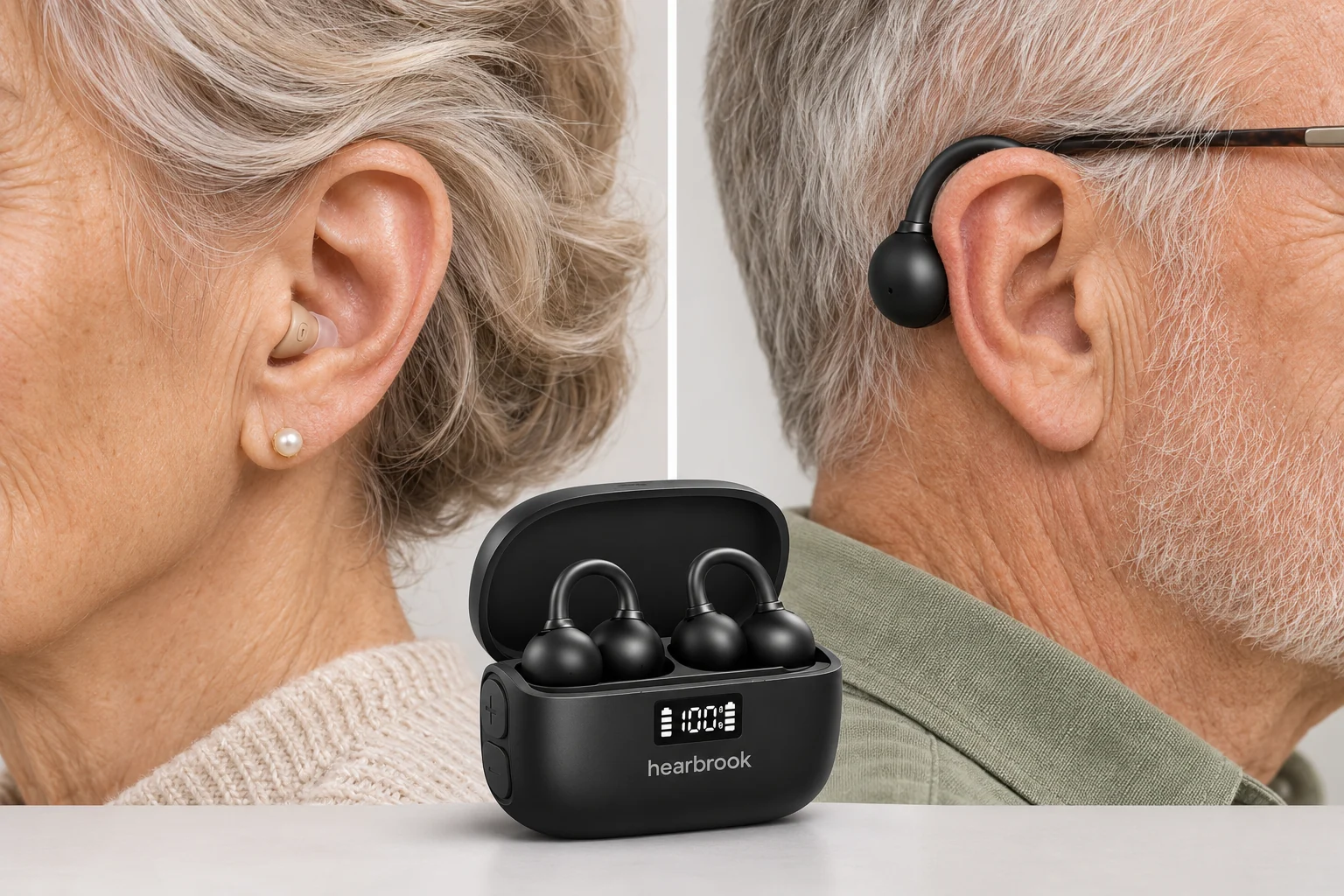
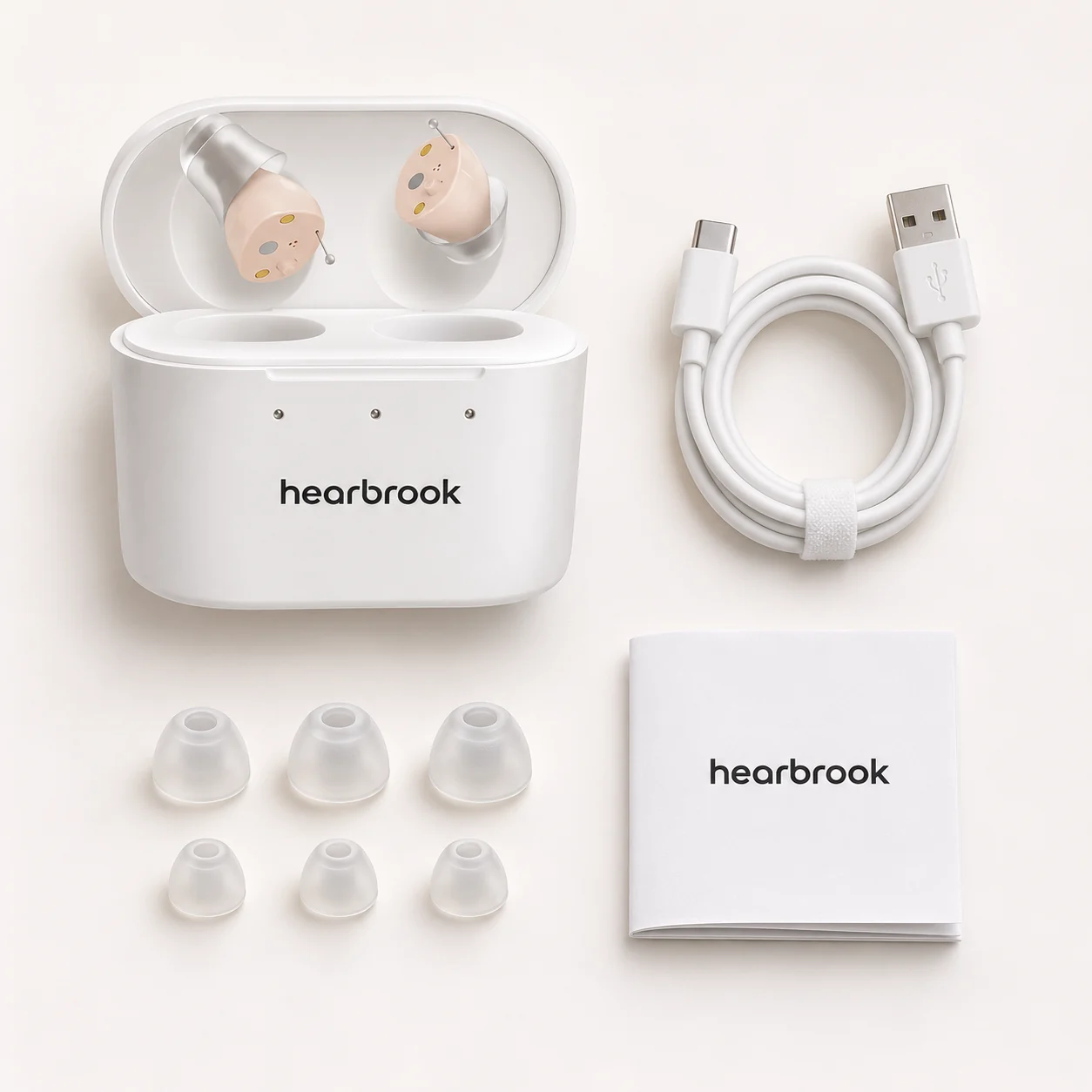
Care for rechargeable hearing aids with the instructions supplied for the exact model. Keep the devices and charging equipment dry, inspect them before charging, use the specified equipment, and contact the manufacturer if charging or performance changes. Do not open the device or replace a built-in battery yourself.
What to keep in mind
- Use the model instructions for cleaning and charging.
- Do not treat water resistance, battery runtime, or replacement procedures as universal.
- A clear description of a charging problem helps support answer the right question.
Make a permanent place for the charging case
Choose a location where you can see the case, reach it comfortably, and keep it away from spills, heat, children, and pets. Check the cable route before deciding. A place that requires stretching a cable across a walkway or balancing the case on an edge creates an avoidable handling problem.
Keep the instructions and a record of the model nearby. If another person helps with the device, agree on where the case belongs and where removed hearing aids should be put. A consistent location also makes it easier to notice when a device is not in its expected place.
Follow the approved cleaning method
The FDA advises cleaning hearing aids as instructed and warns that water, alcohol, solvents, and heat can damage devices. Do not assume a method suitable for a separate removable tip is also suitable for the electronic body. Read the instructions for each part before applying a liquid or cleaning tool.
Before cleaning, identify the microphone opening, sound outlet, and charging contacts from the manufacturer’s diagram. Do not probe an opening because it looks dirty. If the supplied instructions do not explain how to clean a particular area, ask for clarification rather than improvising with a pin, cotton swab, or household cleaner.
Check the charging setup before blaming the battery
When charging seems different, record the setup before changing it. Note which cable and power source are connected, how the device is seated, and what the indicator shows. Compare the indicator with the instructions. A light can have a model-specific meaning, so avoid assuming that a color always signals the same condition.
Check that the case and device are dry and that there is no obvious obstruction preventing correct placement. Follow the documented steps for reseating or restarting. Do not force a device into the wrong position, bridge contacts with metal, or use an unsupported charging arrangement to see whether it works.
Keep a useful record when performance changes
If the hearing aid stops lasting as expected, describe what changed: charging behavior, use pattern, connection to another device, or apparent sound level. Keep observations separate from conclusions. “The charging light does not appear” tells support more than “the battery is broken,” which may or may not identify the cause.
Include the model name and order reference in a support request. A clear photo of how the device sits in the case can help explain a placement question, but avoid showing payment details or unnecessary personal information. Ask which troubleshooting action is appropriate before trying an undocumented reset.
Know when routine troubleshooting should stop
Do not continue using a device that is damaged, unusually hot, leaking, or associated with pain. Set it aside safely and obtain appropriate help. A built-in rechargeable battery is not an invitation to open the shell, pry out a cell, or try a household battery repair. Follow the manufacturer’s return or repair instructions.
For an ordinary ownership question, use product support and ask for the instructions relevant to your model. Keep the reply with your care notes. A routine is useful when it is simple enough to follow and specific enough that a helper does not need to guess.
Common questions
Can every hearing aid be wiped with alcohol?
No. Follow the exact model’s cleaning instructions; the FDA warns that alcohol and solvents can damage hearing aids.
Does a charging case prove a particular battery runtime?
No. Ask for the runtime and charging guidance for the specific model, including the conditions attached to that claim.
Sources & updates
This guide links to public hearing-health information and practical product-selection resources. It has not been presented as a clinical assessment or an individual treatment recommendation.
- FDA: How to Get Hearing Aids ↗Accessed 2026-11-13
Find our editorial and corrections policy. Notice something that needs updating? Send a correction.