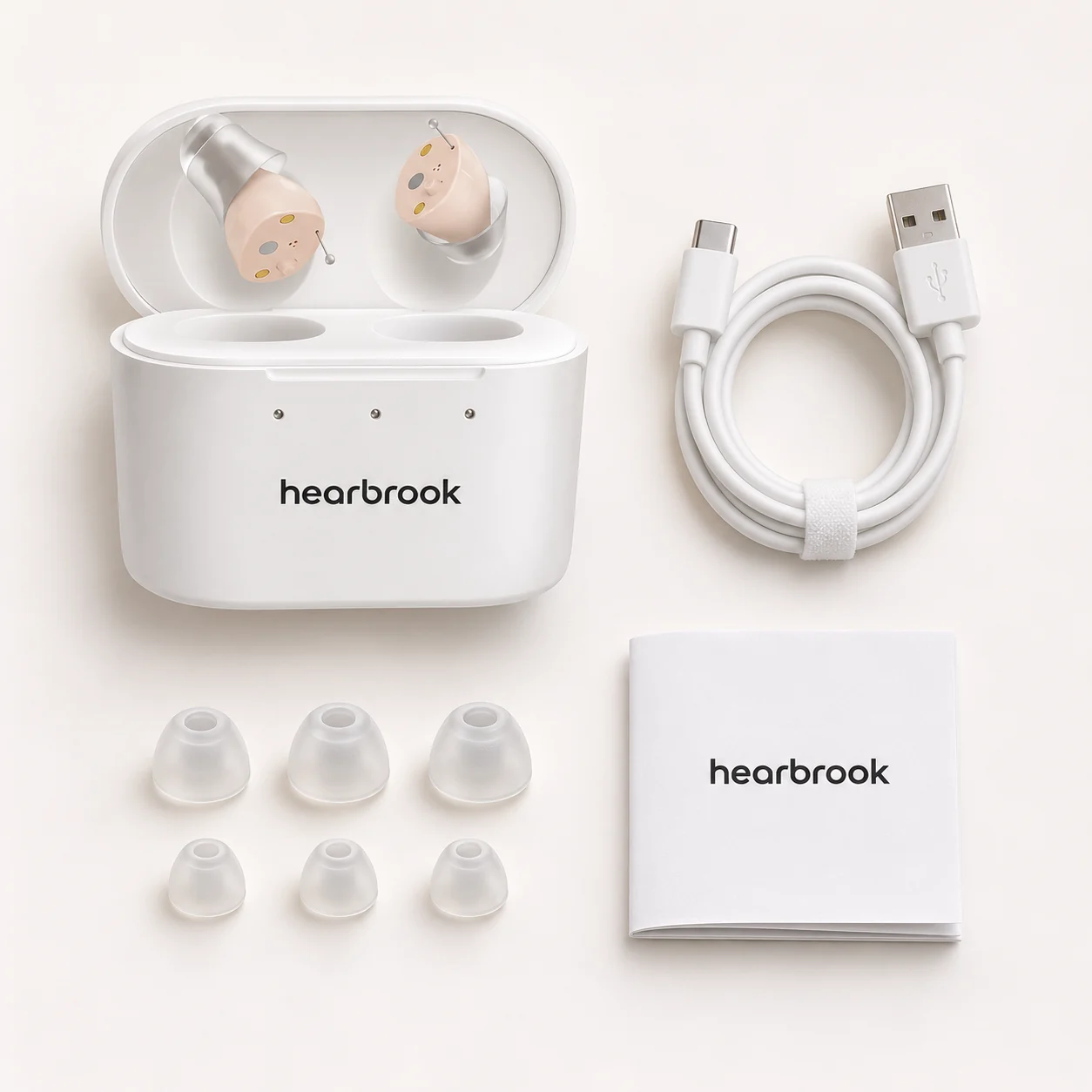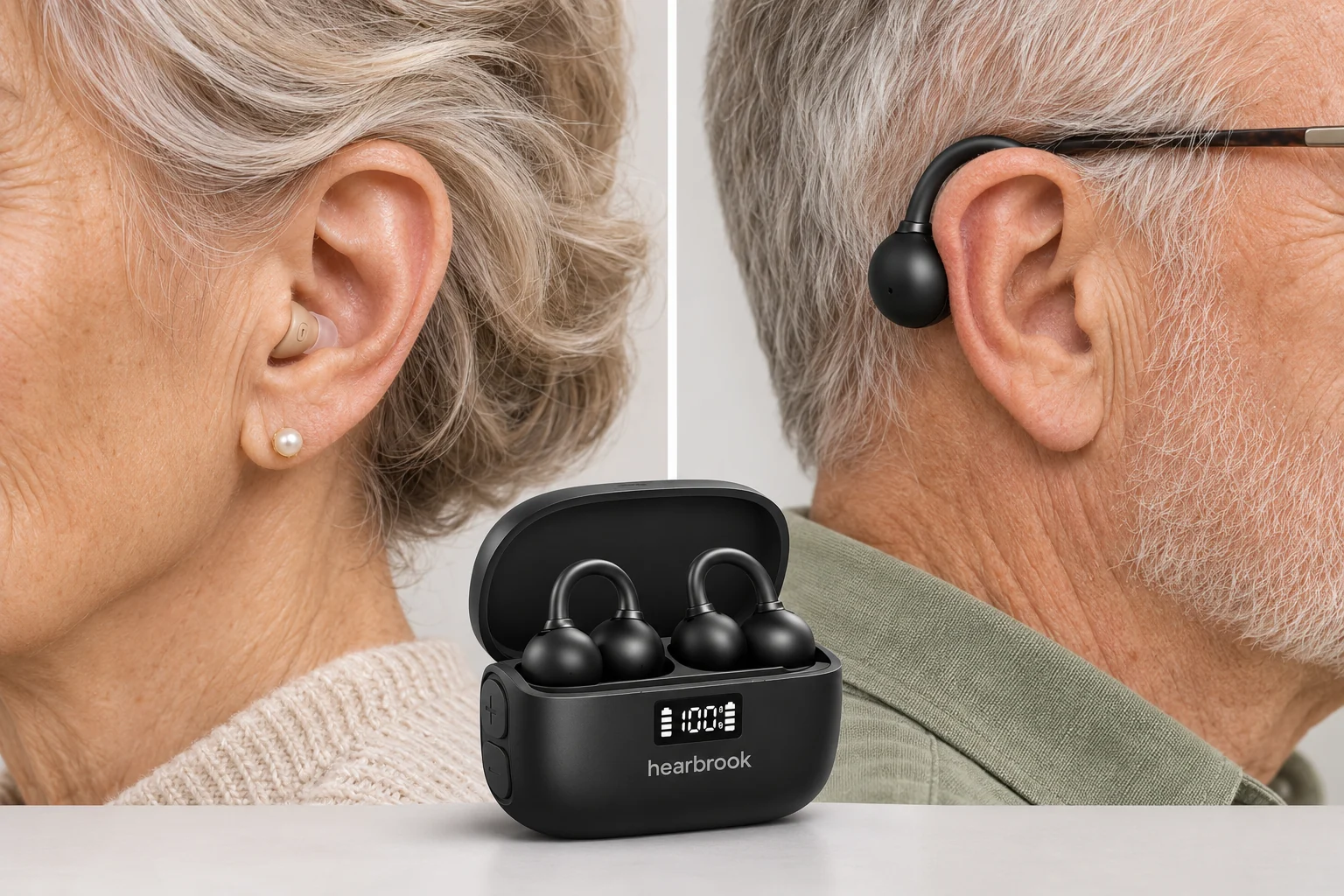

Use your first week to learn the controls, establish a comfortable placement, and evaluate familiar listening tasks. It is an orientation period, not a deadline by which every sound must feel normal. Follow the model instructions, keep useful notes, and seek help for pain, unresolved handling problems, or hearing concerns.
What to keep in mind
- Learn handling before judging every listening environment.
- Record a concrete question rather than changing unrelated settings repeatedly.
- A first-week plan is an organizing suggestion, not a promised adjustment timetable.
Start with the package and the instructions
Check that the model delivered matches the order. Place the contents where you can identify them without rushing, and read the supplied instructions before inserting or charging the device. Keep the order and delivery records with the instructions. If a part is missing or unfamiliar, ask before trying to substitute something from another device.
Learn where the device should be held, how it is removed, and how the controls work. If a helper is present, ask them to follow the same instructions. The purpose is to make the basic tasks understandable, not to prove that the wearer can manage without assistance.
Choose a familiar setting for the first observations
Begin with a comfortable room and a conversation you want to follow. The FDA notes that new hearing-aid users can find sounds, including their own voice, unexpectedly loud and that adjustment is individual. Do not turn this into a promise that every uncomfortable experience will disappear if ignored.
Describe the experience specifically: the placement, the ordinary listening setting, the control used, and what sounded different. Keep discomfort distinct from an unfamiliar sound. If the device causes pain or sound is uncomfortably loud, stop and obtain appropriate assistance rather than increasing wear time to meet an informal schedule.
Build confidence with the controls and the case
Practice the tasks in the supplied instructions when you are not also trying to follow a conversation. Identify the normal listening setting and how to return to it. Check the charging instructions and the meaning of the indicators. Do not assume that lights or button actions match those on another model.
Choose a regular place for storing the case and instructions. If an app is required, make sure the wearer knows which screen controls the needed function and how to close it without losing the ordinary setup. Save account access securely; a support message should never include a password or a verification code.
Try the situations that influenced the purchase
Return to the activities you wrote down before ordering: a family conversation, a call, television, or another familiar task. Try to describe each activity separately. A failed phone connection, for example, should not be recorded as proof that the hearing aid cannot help with an in-room conversation.
Use brief notes rather than a complicated scoring system. Record what was attempted, which documented feature was used, and the question to resolve next. This makes a support discussion more productive and prevents several unrelated difficulties from being compressed into a single statement that everything is wrong.
Review what help is needed next
At the end of your initial orientation, look for unanswered questions, not a pass-or-fail result. Can you operate and store the device? Does the placement need help? Is a particular listening situation still difficult? Which question belongs with product support, and which calls for a hearing professional?
Keep your return deadline visible while seeking assistance. Asking for help does not mean giving up the option to return an unsuitable purchase. Use the contact form for product questions and read the return policy before deciding how to proceed. Your notes should support your decision, not pressure you into keeping a device.
Common questions
Must a hearing aid feel normal by the end of the first week?
No fixed first-week result is promised. The plan here organizes setup and observations; it is not a clinical adjustment timetable.
Should pain be treated as normal adjustment?
No. Remove a painful device and seek appropriate assistance. Do not force a fit or continue uncomfortable sound exposure.
Sources & updates
This guide links to public hearing-health information and practical product-selection resources. It has not been presented as a clinical assessment or an individual treatment recommendation.
- FDA: Hearing Aid Benefits and Limitations ↗Accessed 2026-11-13
Find our editorial and corrections policy. Notice something that needs updating? Send a correction.