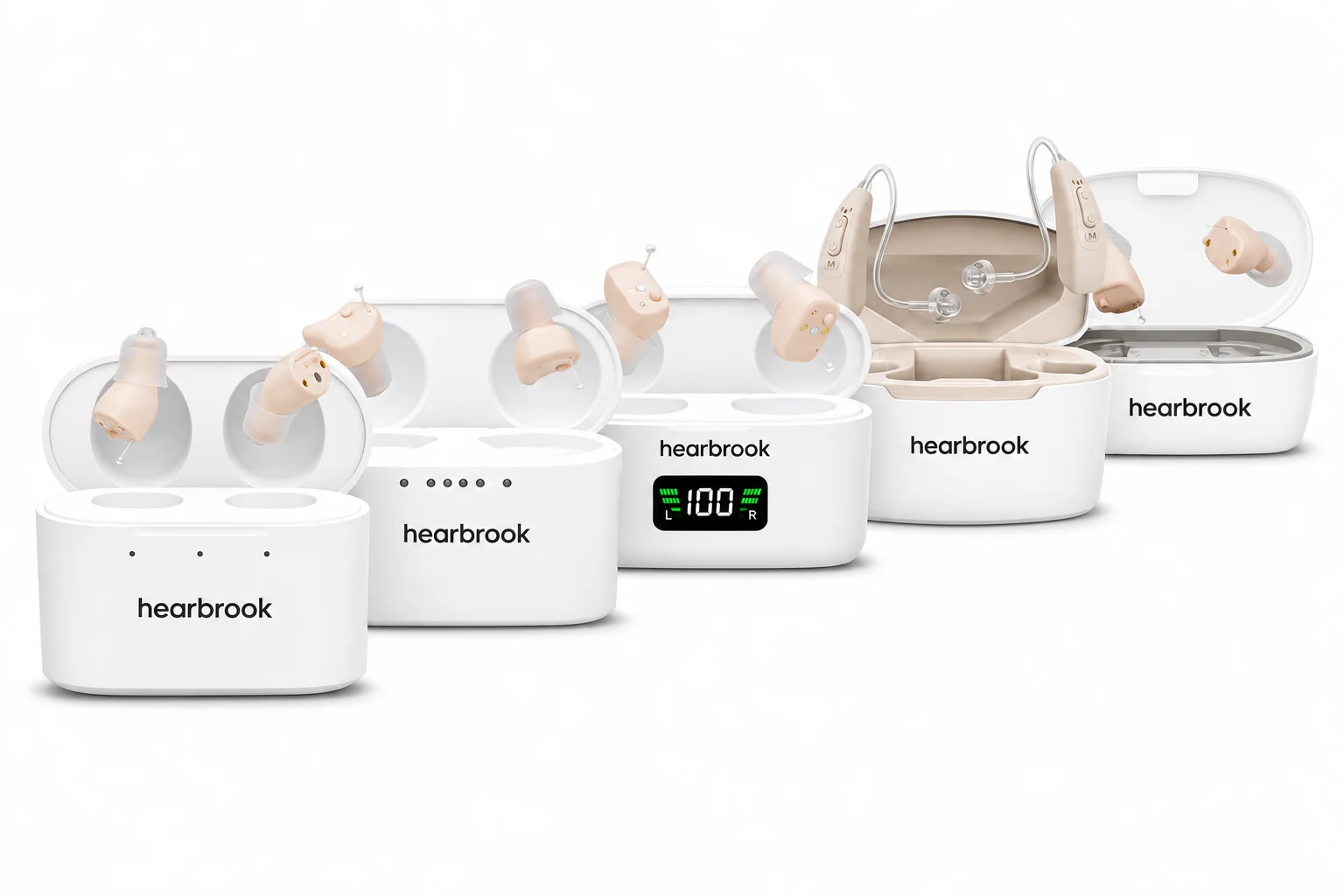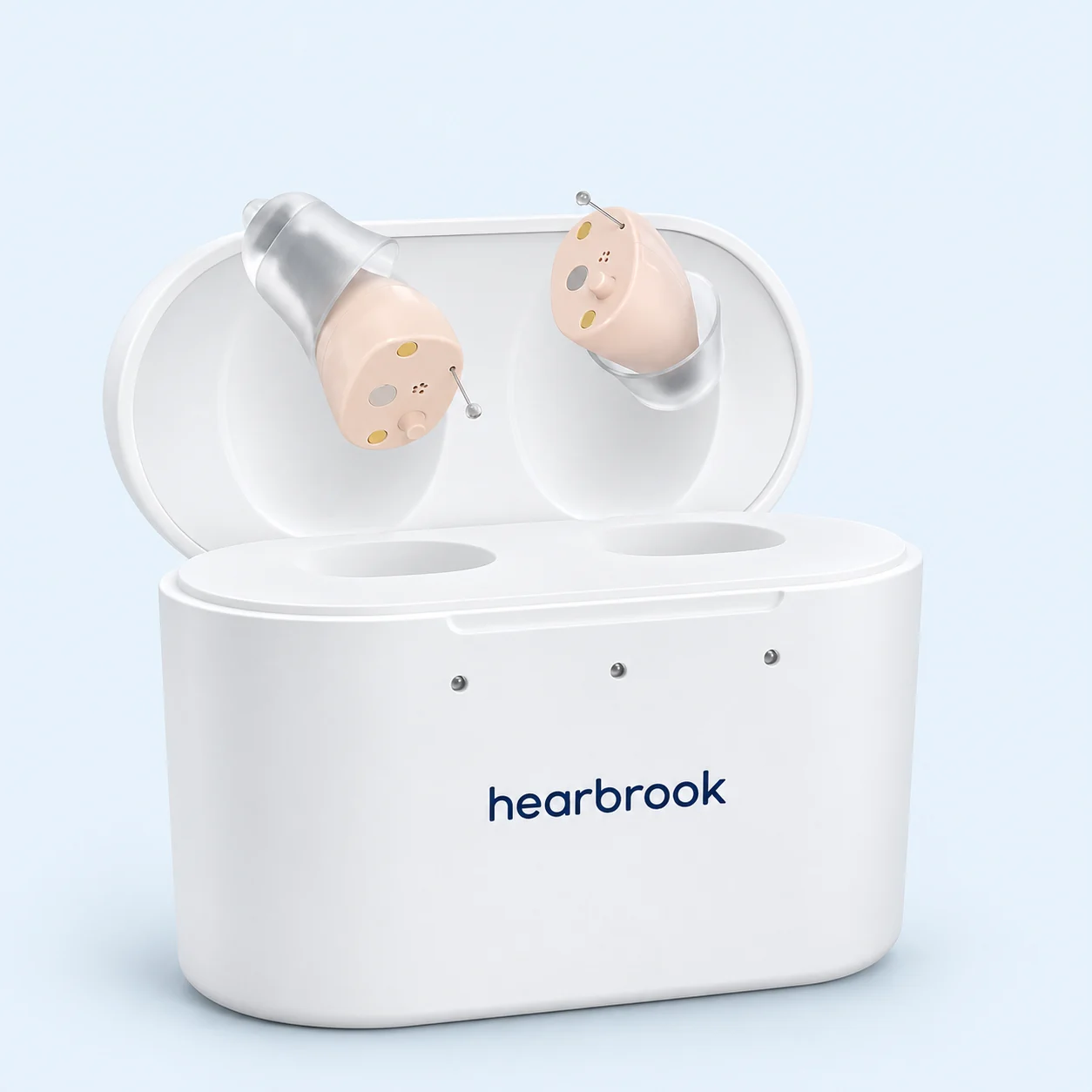
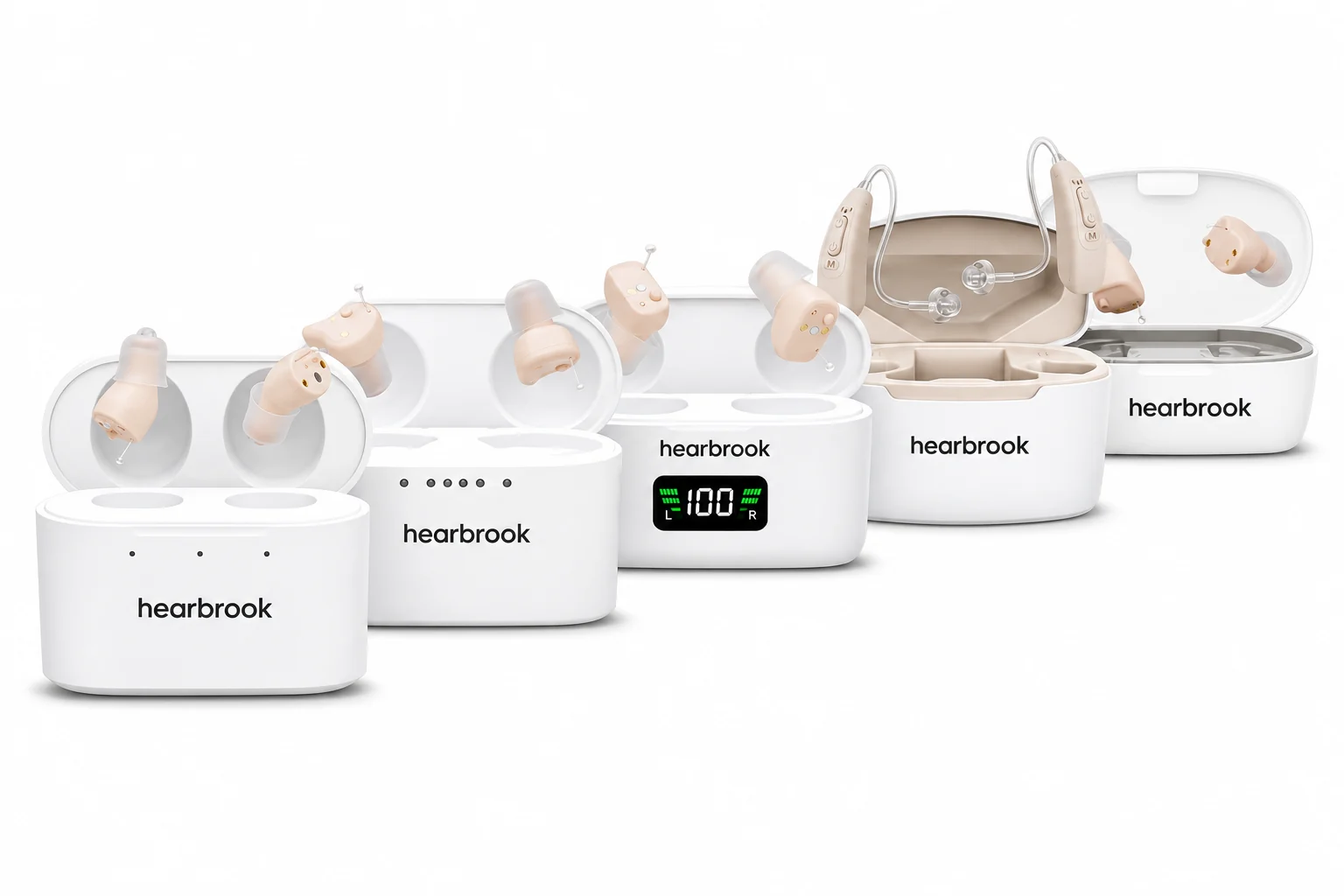
Over-the-counter hearing aids are hearing aids that eligible adults can buy directly without a prescription. In the United States, they are intended for people 18 and older with perceived mild to moderate hearing loss. Choosing an OTC model still requires checking the intended use, controls, support, and return terms.
What to keep in mind
- OTC describes how an eligible hearing aid can be bought; it does not guarantee a particular feature.
- Compare practical tasks and written policies before comparing appearance.
- A shopping quiz cannot diagnose hearing loss or rule out an ear condition.
What the OTC label does—and does not—tell you
The FDA describes OTC hearing aids as medical devices users can purchase without the involvement of a licensed hearing professional. That category is separate from a prescription hearing aid and from a personal sound amplifier. Read the actual product labeling rather than treating every small device sold online as the same kind of product.
The category alone does not tell you whether a model streams calls, needs an app, offers different listening settings, or will feel comfortable in your ear. Those are model questions. Keep a short comparison sheet with a separate row for each question, and record the seller’s answer instead of filling gaps from a photograph.
Begin with the task you want to make easier
Write down an ordinary situation in specific terms: following a conversation across the dinner table, understanding television dialogue, or hearing a colleague during a meeting. “Better hearing” is difficult to evaluate. A clearly described activity gives you something useful to discuss with a seller or hearing professional.
Add the practical details around that activity. Do you wear glasses? Would you prefer a button to an app? Where could the charging case stay? Will another person help with setup? These questions do not establish medical suitability, but they can prevent buying a device whose everyday operation does not fit your routine.
Read the operating instructions before checkout
Look for instructions you can open without giving payment details. Check how the hearing aid is inserted, removed, charged, and adjusted. If the instructions depend on an app, confirm that the app is available for your own phone and that the person wearing the hearing aids can use it.
Ask about anything that remains unclear. For example, a picture of a charging case does not establish the included cable, power adapter, or battery runtime. A wireless symbol does not establish television compatibility. Request model-specific information in writing, and keep the reply with your order records.
Make support and return terms part of the comparison
Open the return policy before deciding. Establish when the return period begins, what action starts a return, which items must be sent back, and who provides the shipping label. Check the warranty separately: a warranty for a defect is not necessarily the same as a return because the fit or sound does not suit you.
For Hearbrook, the current policy offers a 100-day return period from delivery and a 2-year limited warranty. Read the return policy and warranty for the complete terms. Use the contact form to resolve a question before placing an order.
Choose the next step that answers your remaining question
If you are unsure whether the hearing aid category suits your hearing, ask a hearing health professional rather than asking a shopping page to settle it. If your question is about charging, handling, or an accessory, ask the seller for the relevant instructions. Different questions need different answers.
Before ordering, save the model name, product page, final order total, and applicable return policy. After delivery, check the package against the order and store the supplied instructions. A complete purchase record makes later setup help, replacement-part requests, and return decisions more straightforward.
Common questions
Does OTC mean the hearing aid needs no setup?
No. Read the model instructions for fitting and adjustment. The OTC category does not mean every model operates the same way.
Can a hearing test still be useful?
Yes. Buying OTC does not prevent you from seeking a professional hearing evaluation, especially when suitability is unclear.
Sources & updates
This guide links to public hearing-health information and practical product-selection resources. It has not been presented as a clinical assessment or an individual treatment recommendation.
- FDA: OTC Hearing Aids — What You Should Know ↗Accessed 2026-11-13
Find our editorial and corrections policy. Notice something that needs updating? Send a correction.